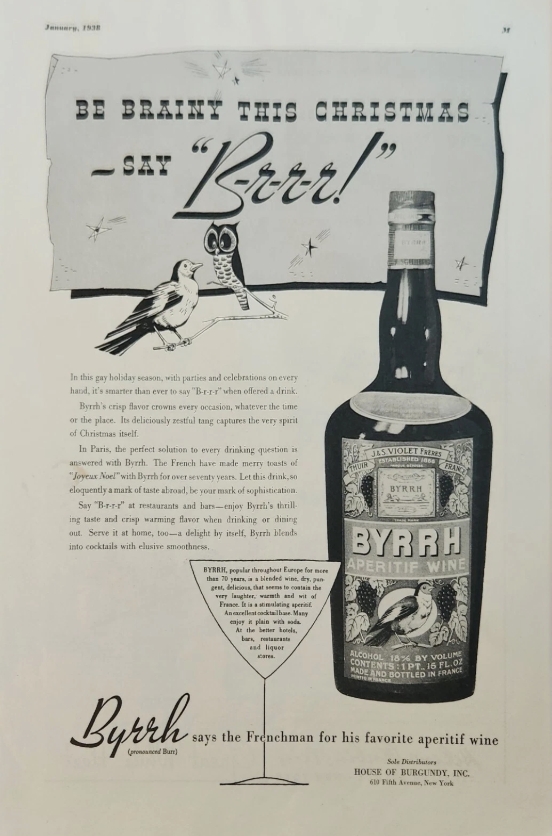
In January 1938, readers flipping through the pages of an American magazine encountered an invitation to Be Brainy This Christmas ~ Say 'Byrrh!'
Just four years earlier, this advertisement would have been illegal.
On December 5, 1933, the twenty-first amendment to the Constitution of the United States brought Prohibition to an end, repealing a national experiment that had outlawed the manufacture and sale of alcoholic beverages for thirteen years. This ad marks a time when America was rediscovering an entire culture of wine, spirits, and hospitality that had been interrupted by dubiously effectively legislation.
Byrrh (pronounced beer in French) itself is a fortified wine flavored with botanicals. Created in 1866 by brothers Simon and Pallade Violet in the French town of Thuir, near the Spanish border, Byrrh quickly became one of France's most celebrated apéritifs. Originally, it was presented as a tonic wine with medicinal properties. This was extremely common in the nineteenth century, and there may be some truth to these assertions in the present.
Long before aspirin or antibiotics, quinine was one of the world's most valuable medicines. Extracted from cinchona bark, it was widely used to treat malaria and reduce fever. Europeans had relied upon it for centuries. By blending quinine with wine, herbs, and spices, producers created beverages that were both pleasantly bitter and easier to consume than medicine alone. These tonic wines were believed to stimulate digestion, restore vitality, and improve one's general well-being. This was long before modern regulations prohibited alcoholic beverages from being marketed as medicines. The bitterness of this beverage (whether from quinine, gentian, wormwood, or other botanicals) stimulates the palate and has long been associated with preparing the digestive system for dinner. For generations, ordering an aperitif before a meal wasn't merely about drinking. It was part of the ritual of dining. That tradition remains alive throughout much of Europe today.
Although Byrrh sales declined after World War II as changing tastes reshaped the market, production never ceased. It is still produced today in Thuir, where visitors can tour the historic cellars and see one of the world's largest oak wine vats. Just as Prohibition once restricted Americans' access to alcoholic beverages, modern regulations place strict limits on how producers may market them. The Violet brothers were free to promote Byrrh as a tonic wine with restorative qualities. Such claims that would be impossible to make today. Whether those nineteenth-century beliefs contained more than a grain of truth is a question history leaves for us to ponder.