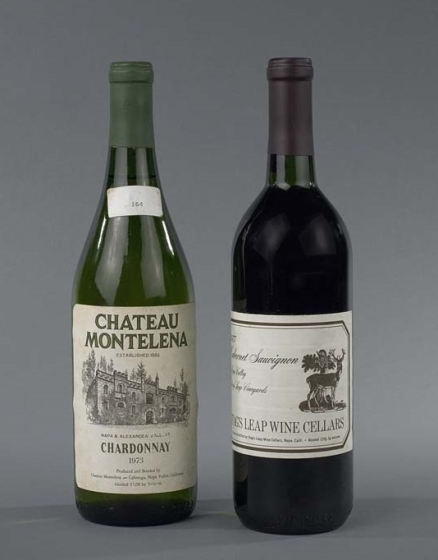
On May 24, 1976, nine respected French wine authorities gathered in Paris for what was expected to be a fairly predictable comparison between French and California wines; odds were on the former. France supplied celebrated white Burgundies and classified-growth Bordeaux. The California bottles were little known, scarce even at home, and regarded by much of the European wine establishment as interesting newcomers rather than serious competition.
Then the judges tasted the wines blind.
When the scores were counted, the 1973 Château Montelena Chardonnay had placed first among the whites, ahead of the French Burgundies. The 1973 Stag’s Leap Wine Cellars Cabernet Sauvignon had won the red tasting, surpassing wines from Bordeaux estates including Château Mouton-Rothschild and Château Haut-Brion. An event conceived in connection with the American Bicentennial had produced a result almost no one expected: California had defeated France in both categories. Indeed, this was just as big, if not bigger, than the Italian Stallion besting Apollo Creed in the original Rocky movie.
The American Reporter in the Room at the Judgment of Paris
George M. Taber, then a Paris correspondent for TIME, was the only journalist present at this tasting. The French press had declined to attend, perhaps because the likely outcome seemed too obvious to warrant coverage. Taber accepted the invitation and found himself watching a story develop in real time as the judges confidently praised wines they believed to be French and dismissed others they assumed came from California (sometimes incorrectly).
Taber's account appeared in the June 7, 1976 issue of TIME under the heading Modern Living: Judgment of Paris. The report was remarkably brief. Its opening established the cultural divide immediately: Americans had praised California wine abroad for years, only to encounter disbelief. At last, this tasting both vindicated and validated California wines. Château Montelena’s Jim Barrett supplied the most apt closing line: “Not bad for kids from the sticks.”
From Magazine News to American History
In 1996, the Smithsonian’s National Museum of American History acquired bottles of the two winning 1973 vintages: Château Montelena Chardonnay and Stag’s Leap Wine Cellars S.L.V. Cabernet Sauvignon, for its permanent collection. Yes, a bottle of wine made with California grapes is forever preserved as evidence of a transformation in American agriculture, business, taste and culture.
The Smithsonian returned to the story again in 2026 for the tasting’s fiftieth anniversary, commemorating the Judgment of Paris alongside the 250th anniversary of the United States. The pairing was appropriate: the tasting had been organized during America’s Bicentennial year, and the result became an unexpected expression of American possibility.
Our Modern Pour: Château Montelena Chardonnay
The 1973 vintage of Château Montelena’s Chardonnay did more than win a bicentennial year tasting. The wine showed that California could produce Chardonnay of exceptional quality, capable of standing beside, and defeating, highly regarded white Burgundy in a blind comparison.
Today’s Château Montelena Chardonnay carries a history that few wines can equal. Each bottle connects the modern drinker to the Judgment of Paris tasting and the winning vintage now preserved by the Smithsonian.
Every vintage of Château Montelena tells part of the same family story. Jim Barrett purchased the winery in 1972, and his son Bo was already working harvest when the now-famous 1973 Chardonnay was made. Today, Bo still leads the winery, making Château Montelena one of the rare estates where the person overseeing today's wines also helped produce the bottle that forever changed American wine history.
Photo credit: National Museum of American History