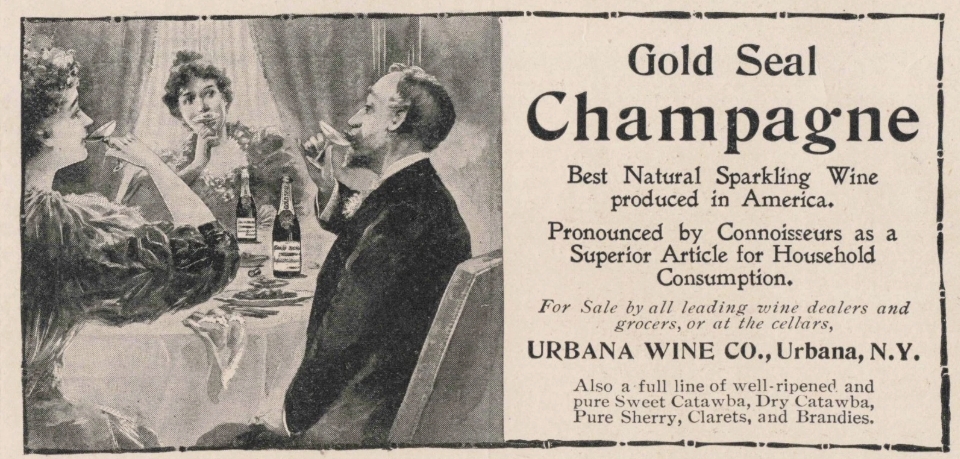
This 1907 advertisement for Gold Seal Champagne presents elegantly dressed diners raising slender glasses around a candlelit table. The scene is unmistakably European in spirit: formal, fashionable and designed to evoke the rituals of Champagne. Yet the wine being poured did not come from Reims or Épernay: It came from Urbana, New York, on the western shore of Keuka Lake. A collective of local entrepreneurs founded Urbana Wine Company as grape growing spread around Keuka Lake during the middle of the nineteenth century. This lake moderated the surrounding climate, while steep hillsides offered favorable conditions for vineyards. The same is true today.
On September 13, 1887, the company registered the Gold Seal trademark for sparkling wine (or what many of us colloquially refer to as “Champagne”). A gold seal suggested official approval, distinction and luxury. It also gave Urbana a recognizable identity at a time when American wineries were trying to distinguish their bottles from both foreign imports and inexpensive domestic wines.
By the time the 1907 advertisement appeared, Gold Seal had become more than a product name. It represented Urbana’s argument that American sparkling wine deserved a place at the formal dinner table. Moreover, the term “Natural Sparkling Wine” distinguished formal winemaking (e.g. fermentation and aging in vessel) from cheaper products that had simply been carbonated. Urbana wanted consumers to understand this critical difference.
The ad ratifies the conviction that New York possesses its own wine identity. New York is not subordinate, but rather, equal to its European counterparts. This stance of collaboration over competition remains true in wine industry circles of the modern age. The more people who engage with this magical beverage, the better.
More than a century after those diners in the a raised their glasses, New York sparkling wines continue to compete for a place beside respected bottles from around the world.